
Self-service for employees
In the context of Identity and Access Management (IAM), employee self-service refers to a system or set of tools that enables employees within an organisation to manage their own access rights and permissions to various IT resources, systems, applications, and data. This allows employees to perform actions such as requesting access to specific resources, resetting passwords, updating personal information, and changing their access permissions, all without the intervention of IT or administrative staff.
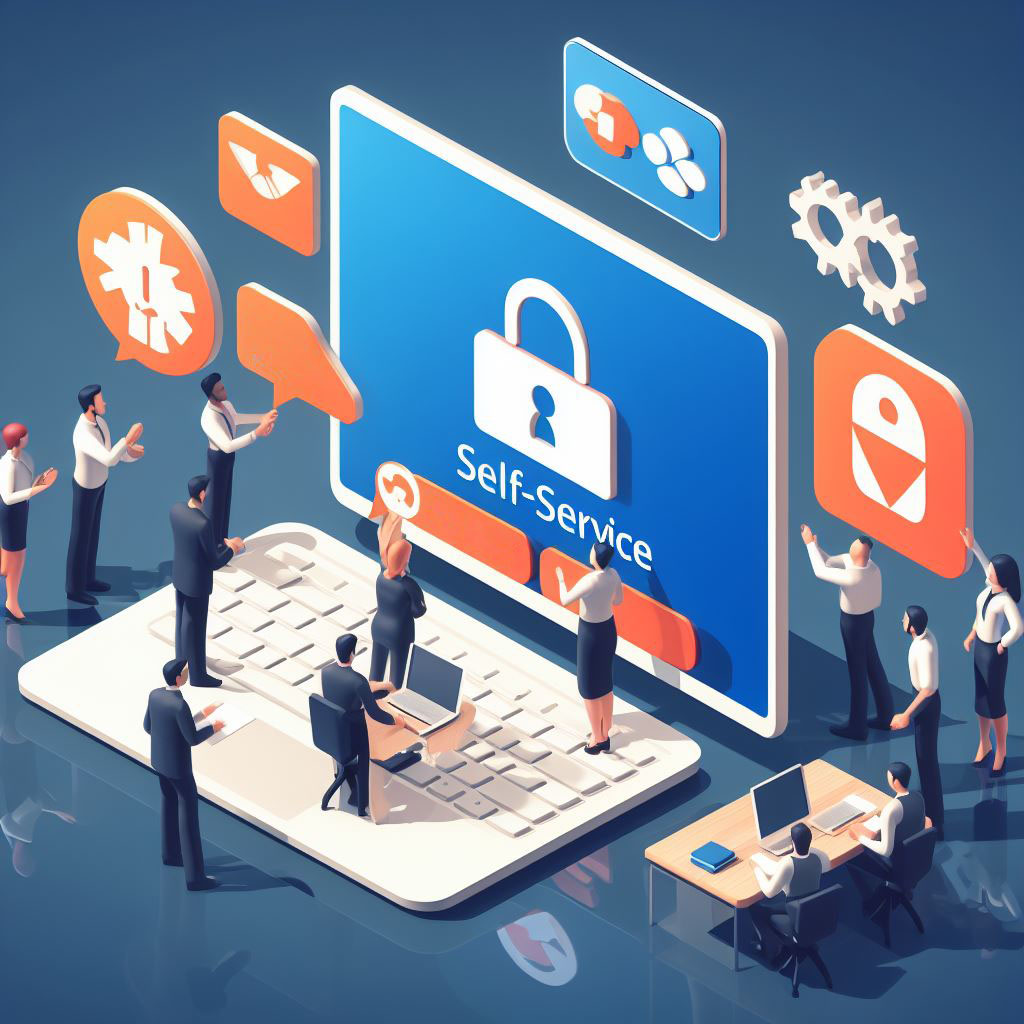
Reasons to implement employee self-service:

Efficiency: Self-service reduces the burden on IT support teams by enabling employees to handle routine access and authorisation tasks themselves. This frees up IT staff to focus on more complex issues and strategic initiatives.

Productivity: Employees can quickly request access to the resources they need, giving them the right permissions to perform their tasks without unnecessary delays. This leads to increased productivity and smoother workflows.

User Experience: Self-service empowers employees to take control of their own access needs, leading to a better user experience. They can manage their own passwords, update personal information, and access resources seamlessly.

Reduced Errors: Allowing employees to manage their own access reduces the chance of errors that can occur when manual requests are processed by IT staff. This helps maintain accurate and up-to-date access rights.

Compliance and Security: Self-service systems for IT systems can include built-in approval workflows and audit mechanisms. This ensures that access requests and changes are routed through the appropriate authorisation channels, improving compliance with regulations and organisational security policies.

Cost savings: By reducing manual access management tasks, organisations can potentially save costs associated with IT support, help desk activities, and administrative overhead.

Scalability: As organisations grow and the number of employees and resources increases, manually managing access requests becomes impractical. Self-service scales more easily to accommodate larger user groups.
24/7 Availability: Self-service systems are typically available around the clock, allowing employees to manage their access needs at any time, regardless of work hours or time zones.
Empowerment: Giving employees control over their access fosters a sense of ownership and responsibility for their own work environment. It also promotes transparency in access management processes.
Adapting to Remote Work: In the era of remote work and distributed teams, self-service IT tools allow employees to manage their access from anywhere, without having to rely on office support.